Insider Brief
- Space Systems Command awarded three National Security Space Launch Phase 3 Lane 2 contracts to SpaceX, United Launch Services, and Blue Origin to support critical national security missions.
- The contracts are valued at approximately $5.9 billion for SpaceX, $5.4 billion for United Launch Services, and $2.4 billion for Blue Origin, covering launches scheduled between FY27 and FY32.
- Phase 3 introduces a dual-lane acquisition strategy with 84 total missions, emphasizing launch resiliency, industrial base strengthening, and assured access to space.
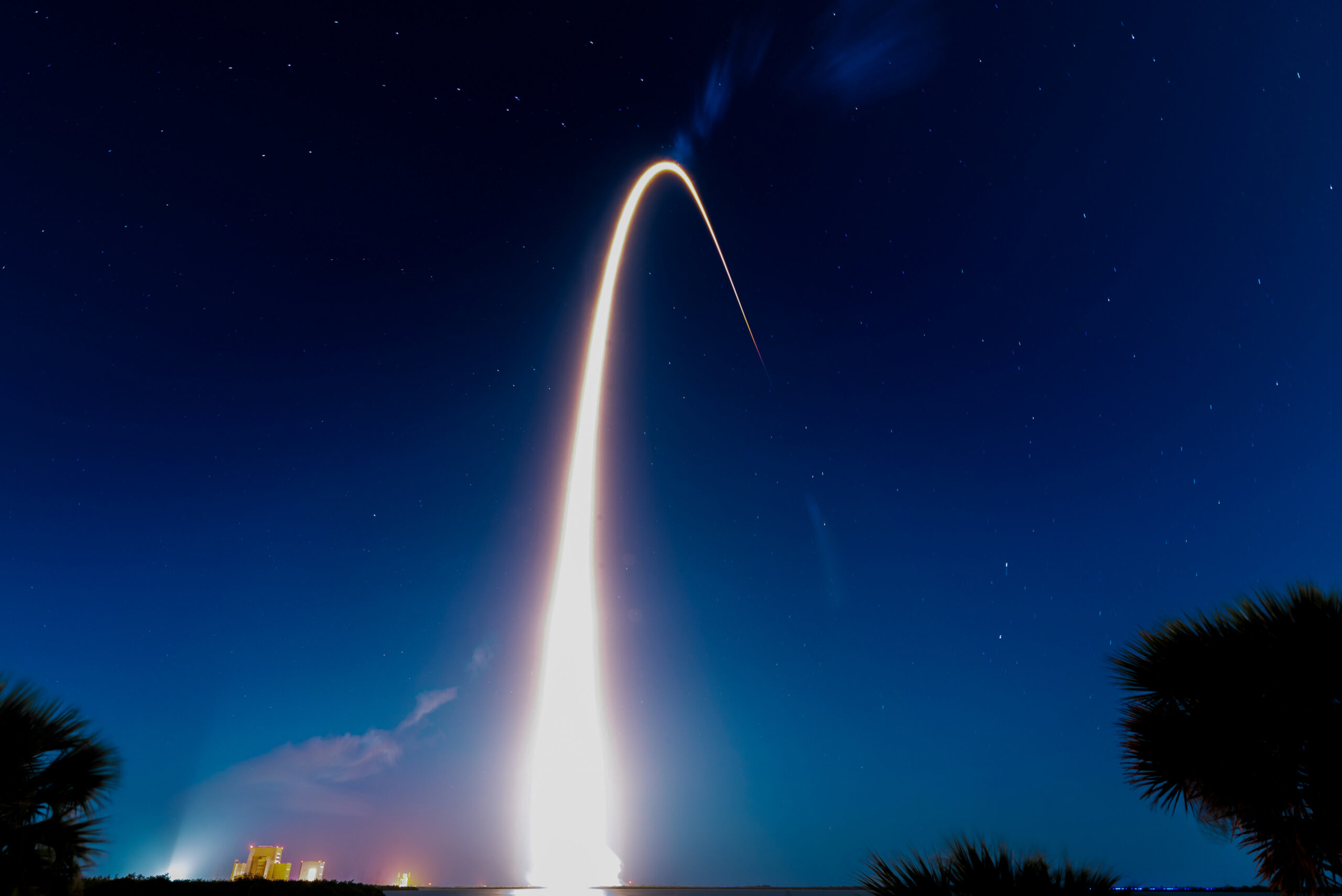
- Image: Joshua Conti, Space Force
PRESS RELEASE — Space Systems Command awarded three National Security Space Launch Phase 3 Lane 2 contracts April 4.
These Firm Fixed-Price, Indefinite-Delivery Requirements contracts were awarded to SpaceX, United Launch Services, and Blue Origin to provide critical space support to meet national security objectives.
Anticipated values for these contracts are $5,923,580,297 for SpaceX, $5,366,439,406 for United Launch Services, and $2,386,234,812 for Blue Origin.

“A robust and resilient space launch architecture is the foundation of both our economic prosperity and our national security,” said U.S. Space Force Chief of Space Operations Gen. Chance Saltzman. “National Security Space Launch isn’t just a program; it’s a strategic necessity that delivers the critical space capabilities our warfighters depend on to fight and win.”
The Phase 3 Acquisition Strategy consists of a dual-lane approach with two separate contract types to fulfill program and national security requirements, providing assured access to space for the integrated space architecture at affordable prices.
Maj. Gen. Stephen Purdy, Acting Assistant Secretary of the Air Force for Space Acquisition and Integration, highlighted the critical role of space dominance in national security. “America leads the world in space launch, and through these NSSL Phase 3 Lane 2 contracts, we will ensure continued access to this vital domain,” he stated. “These awards bolster our ability to launch critical defense satellites while strengthening our industrial base and enhancing operational readiness.”
The overall NSSL Phase 3 Mission Manifest has almost doubled compared to Phase 2, with an anticipated 84 missions being awarded from FY25 through FY29. The increased manifest enabled the program to use the dual-lane acquisition strategy, creating the most cost and time efficient solutions for NSSL launch. Phase 3 has been able to split the manifest into the commercial-like Lane 1 missions (approximately 30 missions), and Lane 2 (approximately 54 missions) which will secure assured access and the highest reliability for our most demanding, least risk-tolerant payloads.
“Today’s award culminates nearly three years of government and industry partnership to increase launch resiliency and capacity,” explained Brig. Gen. Kristin Panzenhagen, Program Executive Officer for Assured Access to Space. “The result is assured access to space for our national security missions, which increases the military’s readiness.”
SpaceX, as the Requirement 1 provider, is anticipated to be awarded 28 missions or about 60% and ULA, as the Requirement 2 provider, is anticipated to be awarded 19 missions or about 40% of the Phase 3 Lane 2 missions from FY25 to FY29. Blue Origin, as the Requirement 3 provider is projected to be awarded seven Phase 3 Lane 2 missions starting in Order Year 2.
Mission awards in FY25–FY29 are projected to have a nominal two-year integration resulting in launches from FY27–FY32.
SSC, in partnership with the NRO, will conduct the Phase 3 Lane 2 Mission Assignment Board to assign the FY25 Order Year 1 missions, and will make those announcements separately following completion of that process, and then in October of each subsequent order year.
SSC is the U.S. Space Force’s field command responsible for acquiring and delivering resilient warfighting capabilities to protect our nation’s strategic advantage in and from space. SSC manages a $15 billion space acquisition budget for the DoD and works in partnership with joint forces, industry, government agencies, and academic and allied organizations to accelerate innovation and outpace emerging threats. Our actions today are making the world a better space for tomorrow. manages a $15 billion annual space acquisition budget for the DoD and works in partnership with joint forces, industry, government agencies, and academic and allied organizations to accelerate innovation and outpace emerging threats.